Deviled Egg Dip

I went on a girl’s trip to Savannah at the beginning of December. We explore savannah’s culinary scene during our time there.

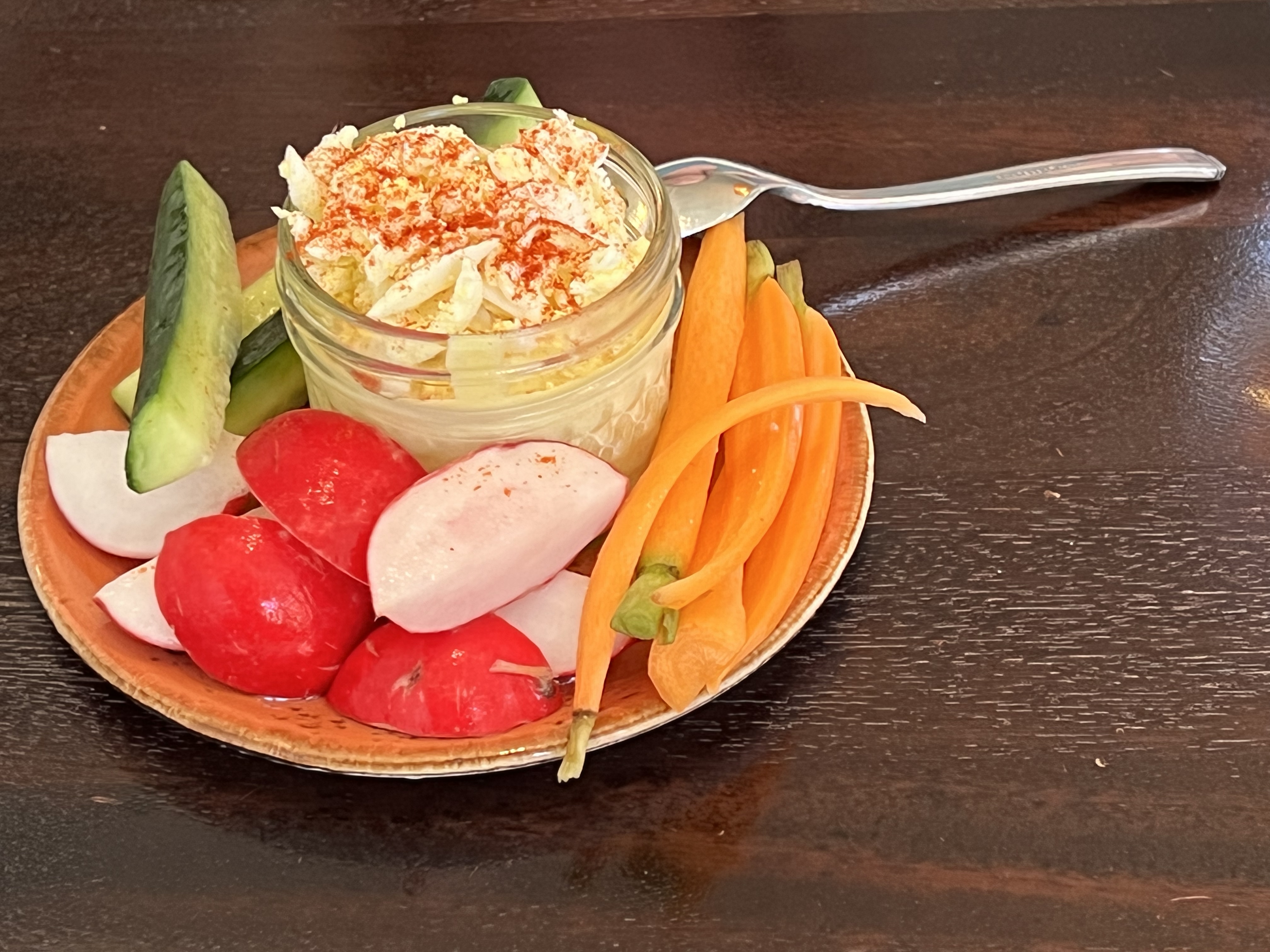
We had brunch at 700 Drayton, right off of Forsyth Park. The Deviled Egg Mousse caught our eyes immediately, so we ordered. In some ways, this turned out to be one of the most memorable dishes of the trip. It was a simple dish, yet so sophisticated and delicious. We cleaned the bowl – they brought us two rounds of veggies (all of which tasted extremely fresh). For me, this might have been the dish of the trip. After eating it, I kept thinking about it (and I am not typically a fan of deviled eggs).  

Over the last couple of weeks, I kept researching different ways to make something similar. Yesterday, we had friends over dinner; I attempted to recreate the recipe. My creation came pretty close.  

Deviled Egg Dip

Ingredients

For the Dip:

  • 6 hard-boiled eggs
  • 4 oz cream cheese
  • ½ cup mayonnaise
  • 2 tablespoons lemon juice
  • 1 ½ teaspoon dijon mustard
  • ¼ teaspoon salt
  • ¼ teaspoon Tabasco sauce (more if you like hot sauce)
  • 2 “shakes” of ground white pepper
  • 1 teaspoon minced garlic
  • 1 teaspoon cooking oil

Garish

  • 1 hard-boiled egg
  • A few shakes of paprika
  1. In a small frying pan, add the cooking oil and minced garlic. Cook until the pieces of garlic begin to brown. Remove from the pan and set aside.
  2. **Peel the hard-boiled eggs and cut them into fourths. (You will use both the egg white and the yolks – they do not need to be separated.)
  3. Add the chopped hard-boiled eggs, cream cheese, mayonnaise, lemon juice, Dijon mustard, salt, Tabasco sauce, and white paper. Pulse about 5 to 8 times until you see the mixture starting to come together (smooth). Add the garlic and scrape down the sides of the bowl. Then process at the low speed for about 20 to 30 seconds until the mixture is smooth.
  4. Transfer to a storage container or storage dish. Refrigerate for 30 minutes (or longer) before serving.
  5. Before serving, garnish the top of the bowl with a chopped-up boiled egg and a few shakes of paprika.

Note… the dip should stay cooled for freshness. If you do not have a chilled (dip on ice) serving bowl, fill a resealable plastic bag with ice and place it into a larger bowl. Nestle your serving bowl on top of the bag of ice. As the ice melts, dump out the water and replace more ice as needed

Crackers, pretzel sticks, or veggies (carrots, radishes, peppers, pickles) make for good dipping options.

** it is best if the eggs are cooled. After chopping, I covered and placed them back in the refrigerator for about 30 minutes.

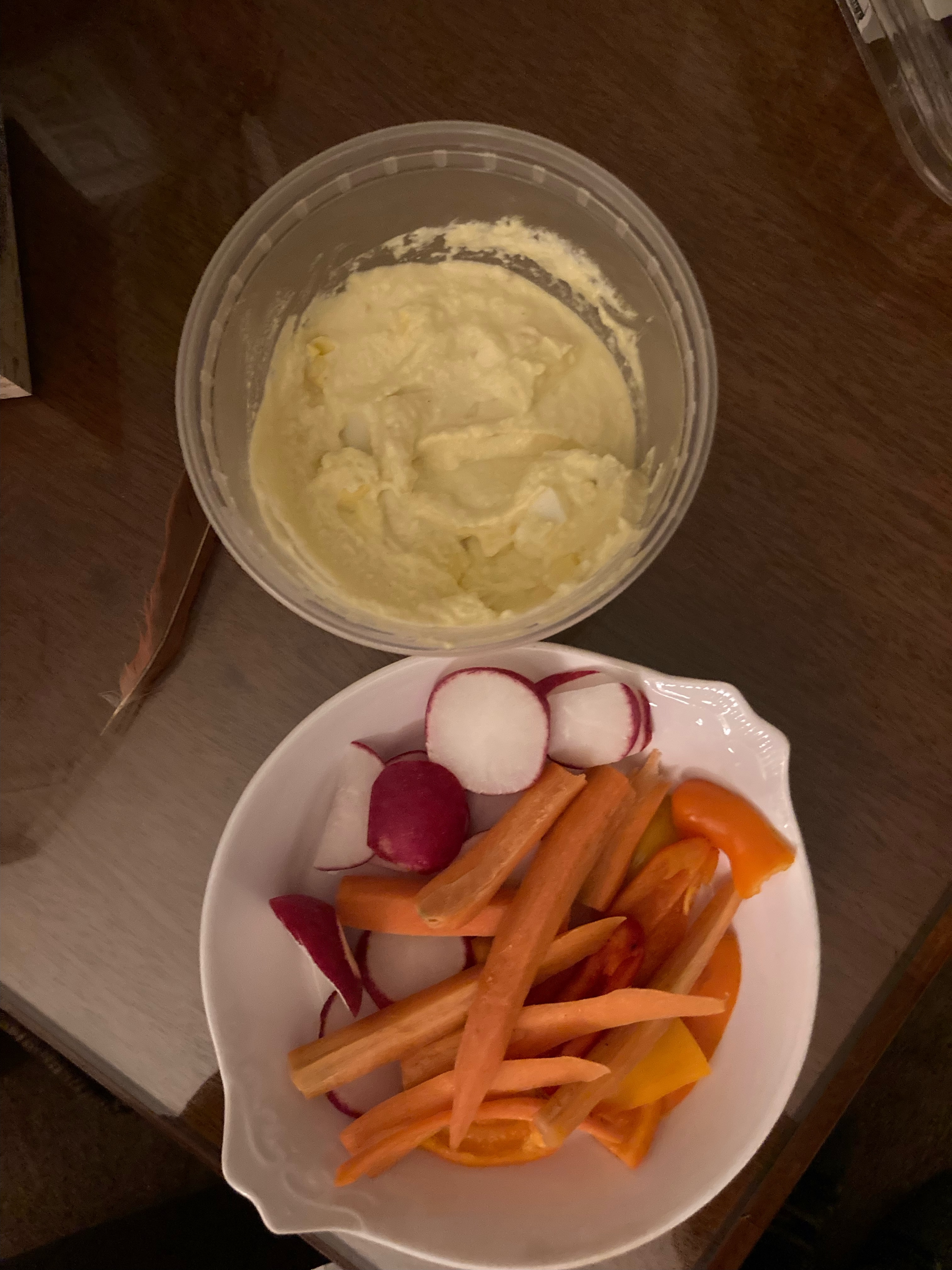
I was finishing up the “dip” as our friends were coming in the door, so I forgot to take a picture of the finished product. A picture of the leftovers is below.

2022 – A new chapter

While yesterday was the start of the new year, it was also the first chapter of 2022.

I spent the first day of 2022 doing two things I love – cooking and visiting with friends. After cleaning up the kitchen and preparing food, and then eating and visiting, I did not have the time to do much else.

Cooking or preparing is when I can often think or reflect (which is why I prefer to cook alone). I kept thinking yesterday that it was the first day of the new year; thus, a blank chapter was upon us. How will the 2022 chapter play out? So many different things crossed my mind. Yet, as the day ended (and I crashed on the couch after “doing” all day long), I realized that I was starting to fall into whole habits. Habits such as doing things for others, other than doing simpler things, give me more time for the things I need to do or not completing things entirely, so I don’t have to revisit them.

The first part of my chapter will be about BALANCE – balancing what I want to do, what I need to do, and what others expect from me. While I always get things done, there has to be a better or more efficient way.

One of the bad things about the new year falling on the weekend is that the workweek is right there to follow. This week education programs begin back at church, the winter dissertation camp begins, progress needs to be made on the conference website, I have various appointments, and I have a pile of laundry that needs to be put away and more laundry to be done. Knowing what is ahead of me this week is both exciting and sickening. I would like just another week to merge into the new year and figure out how to do things (again). While figuring it all out is exciting, it also overwhelming at the same time.

So, here to 2022 and balancing between the expectations of life and the wants of life.

Moving forward with Consistency

I have a blog, but recently I have not blogged a lot. I have thought about blogging but have not taken the time or initiative to write. On the eve of the new year, I am committing to blogging again.

Getting back to blogging means regaining consistency in my life. The last year and a half have been the most inconsistent in recent memory. Getting back to living a productive and successful life not only takes hard work but it takes consistency.

Blogging or writing is a way to sort things; it is also a way to document and remember things. Not writing consistently for over a year has left my mind weak, unable to slow down, and unable to remember various things. For some of us, we can go from moment to moment, dabbling in different events and handling various situations with no issues. For myself, I need a way to reflect on what has happened. Blogging/writing consistency helps me to do this on a daily basis.

Consistency (for me) means continuing to add to the foundation already in place. Within my life, particularly within the last few years, several significant projects have broken ground, and the foundation for success is there. It is now time to see that the foundation fosters development and growth.

I started blogging as an outlet to help rediscover who I was after my life abruptly got turned upside down. Since I started blogging all almost ten years, I have discovered that I am constantly changing and evolving – continually finding myself over and over again. One of the biggest things I have found is that consistency and hard work produce results and get you where you want to be. When let you let up – don’t work as hard – and are not consistent, you only get okay results. The last year, in particular, has been good – but I am tired of settling for good and want the best results I can produce.  

I want the coming year to be about consistency and getting back to my best self. While I know success might not occur in all areas of my life in 2022, I want to work towards it and put forth a consistent effort (my best effort possible).

Daily blogging or writing will help center me in that consistency I strive for. Writing in many ways is meditative, but my writing also needs improvement (development). I don’t expect this blog to be read by many people. That is not the point. The point is that I take time to write and reflect on things daily. If others stumble upon it and it helps them somehow, that is just a bonus.

When the clock strikes midnight, a new year starts. Within that new year, I hope to improve on myself, live in the present – the here and now. The past is the past, and I need to focus on what I am doing now (and in the future) to accomplish my goals and to live my best life.  

Cheers to 2022!

Photobook – “Best of Europe 2018” – designed and printed with SAAL

Two years ago, we were in the midst of our European Adventure. Since returning, I have been working on going through and editing images from the trip – all 88,000 of them. The end goal is to complete a set of photobooks documenting our adventure. Given that it has been two years, one would think all the editing is complete and the photobooks printed – WRONG!!! In all honesty this has become a long term project, but I just hit a small milestone – I just finished a photobook, containing our favorite images from the trip.200614-111834
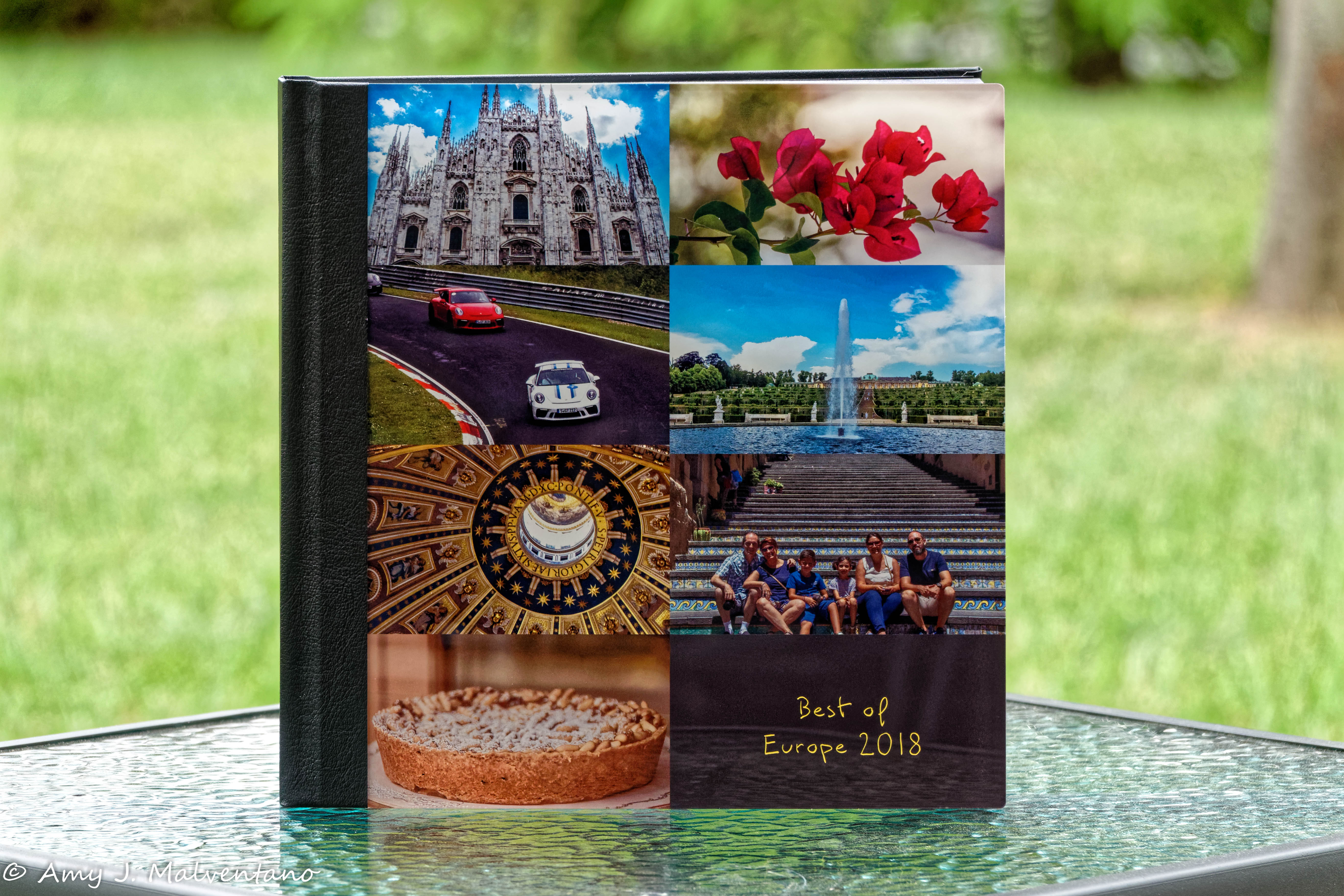
Here is the story of how the photobook – “Best of Europe 2018” – came to be …

A few months ago, SAAL Digital Corporation put out a call for photographers/graphic designers to create a photobook using SAAL’s line of products. I responded to the request, and to my surprise, I was awarded a voucher to use towards the printing of a photobook. Upon receiving the voucher and looking through their photobook product line, I decided to use the voucher to produce a photobook containing our favorite images from the 2018 Europe trip; thus, it was titled “Best of Europe 2018.”

It took six weeks to design and layout the photobook. About four weeks ago the completed version arrived in the mail, and I have to say I am 100% satisfied with the final product. I have been showing it off to everyone I see!!!

Before seeing SAAL’s call for photographers, this was the first time I had heard of this photobook publisher. Additionally, it was the first time I interacted with their products and design software. This first introduction was extremely positive and I am glad I had the opportunity.

Given that this was my first time working with the SAAL software and printing a photobook with them, I want to discuss my experiences with their services, software, and, ultimately, the final product.

One of the first things that stood out about SAAL was that their website was very interactive and provided a good overview of their products. I also noticed that the design and layout for the photobook took place using locally downloaded software and not by editing via the Internet. The software took only a few minutes to download and install. At first, I was not sure about this, but this quickly became one of my favorite features in regards to designing and laying out a photobook using SAAL. 
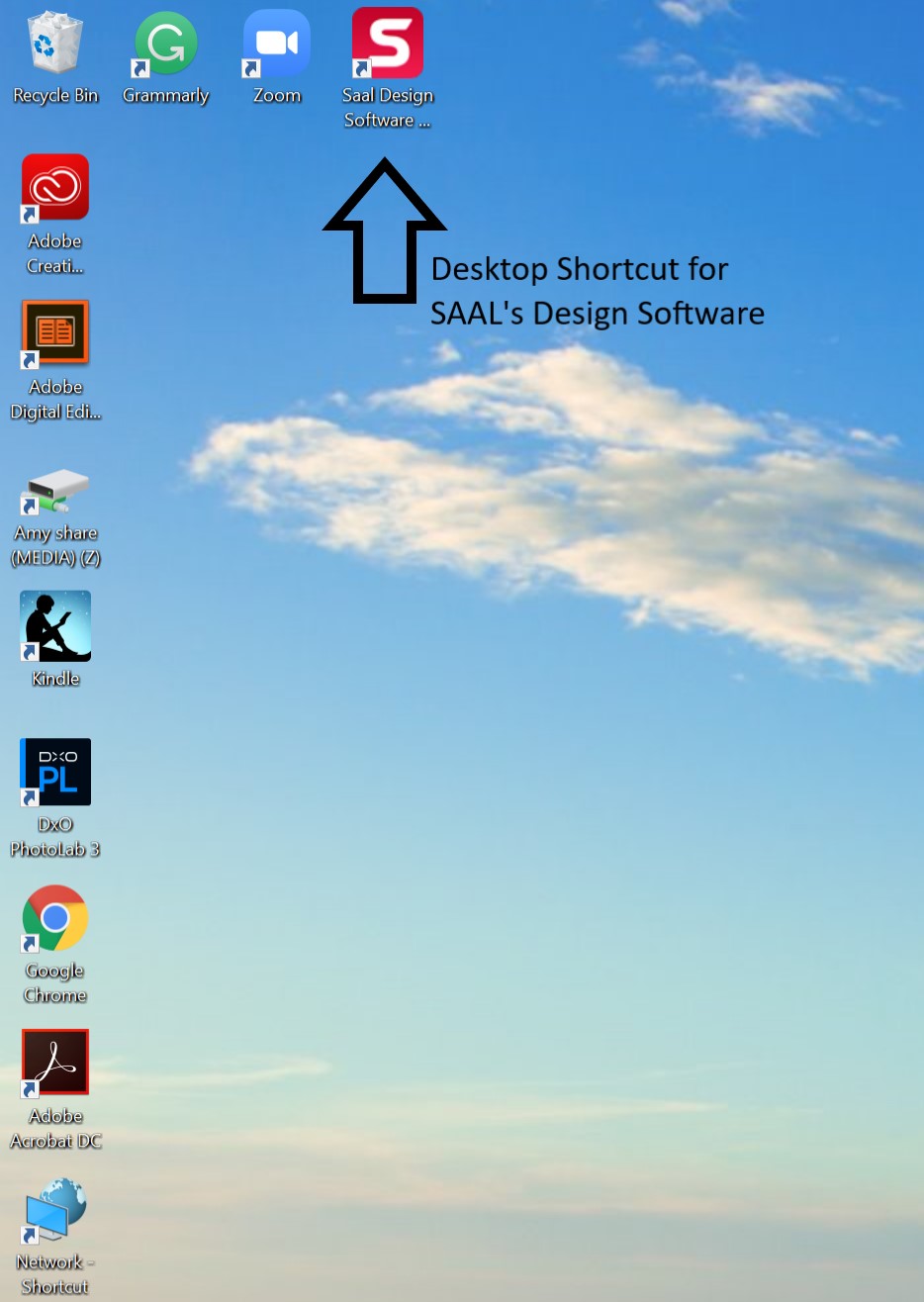
desktop shortcut

Before continuing, I should mention that SAAL offers two other options for designing/creating photographic projects. First, there is the PDF Upload, which allows one to use a plug-in from SAAL to design the photobook using an external software program. Once the layout and design of the photobook is done, it is then uploaded to SAAL for printing. The other option is the SAAL App, which allows you to create not only photobooks but also cards and wall décor from your mobile device. I did download the app, although I did not use it to create this photobook. The SAAL App appears it would work well for one who wants to design photographic projects on the go or from the convenience of their mobile device. Through the app, you can easily layout and print countless items. While neither of the options was used for this project, I am hightly considering the first option for future endeavors.


Selecting the Photobook


After installing SAAL’s design software on my desktop, I went through and looked at all of their photobook options. I finally settled on a 12 x 12 photobook from their professional line. In terms of options, I selected the acrylic and leather cover, with glossy photo paper for the spread (or pages). For the number of pages in the book, I chose the 52-page option, but then ended up adding additional pages. When selecting how you are going to layout the photobook, three options are available – auto layout, one-minute photobook, and empty template. The auto-layout provides for the automatic positioning of images, but this feature can be disabled at any time, and you can design (a) page(s) yourself. Through the one-minute photobook option, the photobook is automatically designed for you. Then, the empty template lets one design the book freely using your creativity and vision to create a book that is very individualistic and personal. With the empty template, you still have access to page templates, framing and shadowing options, and clip art. For this project, I selected the empty template. 


Layout and Personal Design


After selecting all the basics physical design aspects of the photobook, the SAAL software then opens to a blank design layout page. While the layout looks very basic, it has everything you need to design a top of the line, professional, photobook. If this is your first time using SAAL’s design software, there are online tutorials, which explains the various features. Their online tutorials also contain videos on how to design creative covers, use backgrounds, and clipart. Additionally, they also have video tutorials that discuss and provide general design inspiration. One can browse SAAL’s video tutorial library from the following link: https://www.saal-digital.com/service/video-tutorials/


Overall, I found the design software easy to navigate. On the right hand of the screen is a multi-layer bar where you can access options for the physical design of the book (under article), work on layers, access clip art, and layouts. There are both premade layouts for the cover and pages. The panel running across the top contains buttons for the addition of text, objects boxes, and changes to the page background. Also found on this panel is a button that will allow you to activate the auto-layout function. Once this button is activated, suggested layouts will appear under layouts on the right. Suggested layouts are dependent on the number of photos on a page and if an object or text box is present.

sshot-design software home screen

On the left-hand side of the screen is where you view and link to your images. In the image source bar, you can easily map to drives or folders on your computer. The function of the image source bar was another of my favorite features. It made accessing your images into the design easy. Additionally, from here, images could be easily be dragged and dropped onto a page during the layout process.
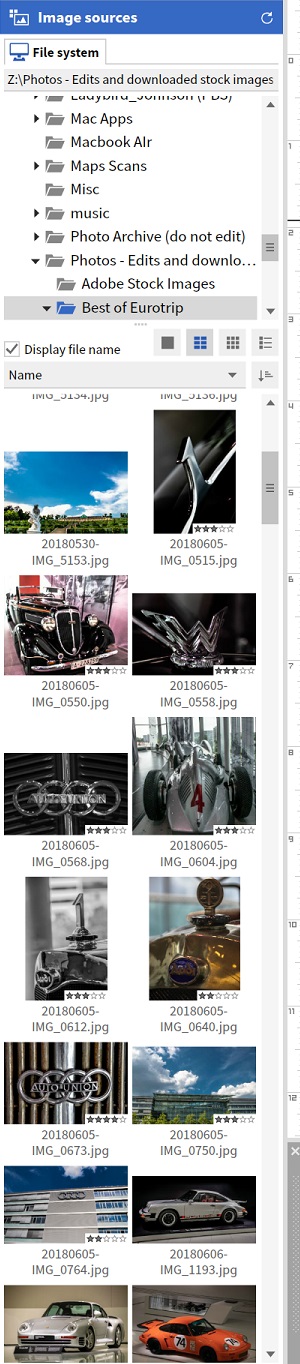
SAAL image Sources

The bottom portion of the screen contains a scrolling bar. The scrolling bar allows you to move between pages quickly and also view thumbnail images of pages. Below the scrolling bar is the price of the book. The cost of the book adjusts as you add or take way pages or other features associated with the price of the photobook. I found both of these features helpful throughout the design and layout process.

As a creative person, who often approaches a photobook project with a vision of the end project already in mind, I found that the empty template provided me with a blank canvas for my imagination to come to life. For over two years, I knew which images I wanted to include in a “best of” photobook, and I already had them pulled together in a folder. One of the visions I had for this photobook was a collage of images on the front cover. Before discovering SAAL’s software, I had been trying to make this vision come to life with various other photobook software/photobook services but had been unsuccessful. When I began using SAAL’s software, it was seamless and came together almost instantaneously. The front cover of the photobook is probably one of my favorite “pages” or aspects of the book.

One feature of SAAL’s software, which made the layout process seamless, was that it had a ruler on the top and right side of the book. While a ruler in the layout space is a simple feature, it is often overlooked by many mainstream photobook software companies, such as MILK and Artifact Uprising. Not only did the ruler help me create a symmetrically designed cover, but it also allowed me to make sure that images were centered and positioned similarly throughout the book. Along the same lines of the ruler is a red line found around the edge of each page. The red line is a guide for photo placement and helps to ensure that images, objects, and text boxes do not get cut off.

ruler and redline

SAAL also has a feature in which they indicate the quality of each image. The image quality indicator not only helps to ensure that images will print in good quality, but this also helps photographers or image editors to see if an image has been over or under edited. There were a couple of images I went back and re-edited after seeing their quality level.
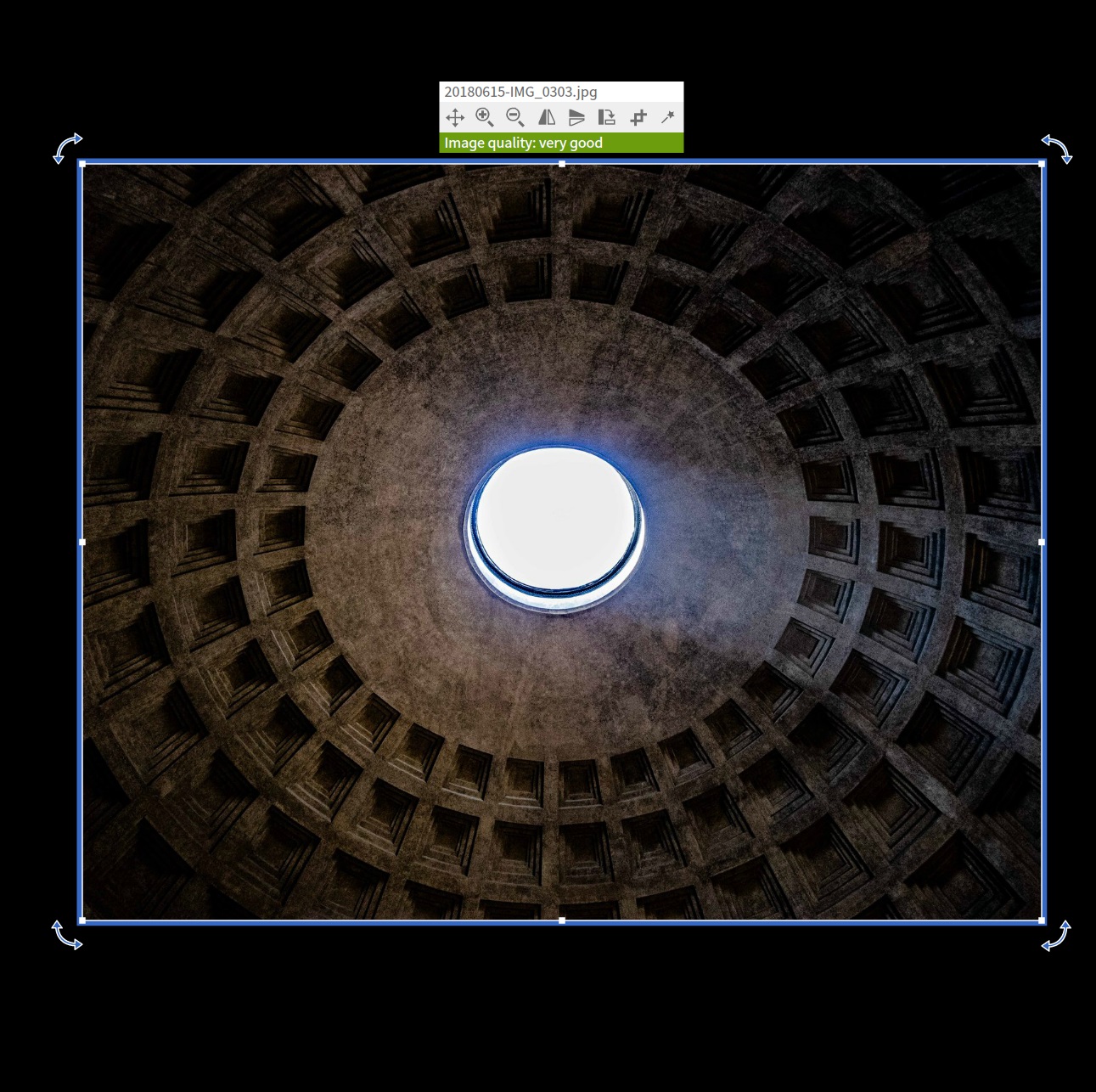
image quality

I should note here that a front/cover page or end page is not a standard feature. If you want to have a blank page at the beginning or end of the book, you will need to consider this in your layout and/or in your page count. As I stated above, I included a cover page, but then I also added a blank page at the end of the book. All of this was my personal preference.

The biggest issue I had when laying out the photobook was remembering to SAVE. Autosave from other programs has me spoiled. The SAAL design software, however, does not contain an autosave feature. I learned this the hard way. One evening I forgot to save my work, walked away from the computer, and an auto-update occurred, forcing the SAAL software to close when my computer rebooted. I ended up losing about three-fourths of a completed book. After this, I began saving after each page edit.

Finalizing, Printing, and Shipping

When it came time to finalize and to submit the book for printing, I was a little nervous. However, SAAL has a review process in place that helps to review the photobook to ensure that everything prints correctly. The review process ensures that both text and images are correctly laid out and will print without issue. The payment and information for shipping is done in a very secure fashion. All of this went flawlessly.
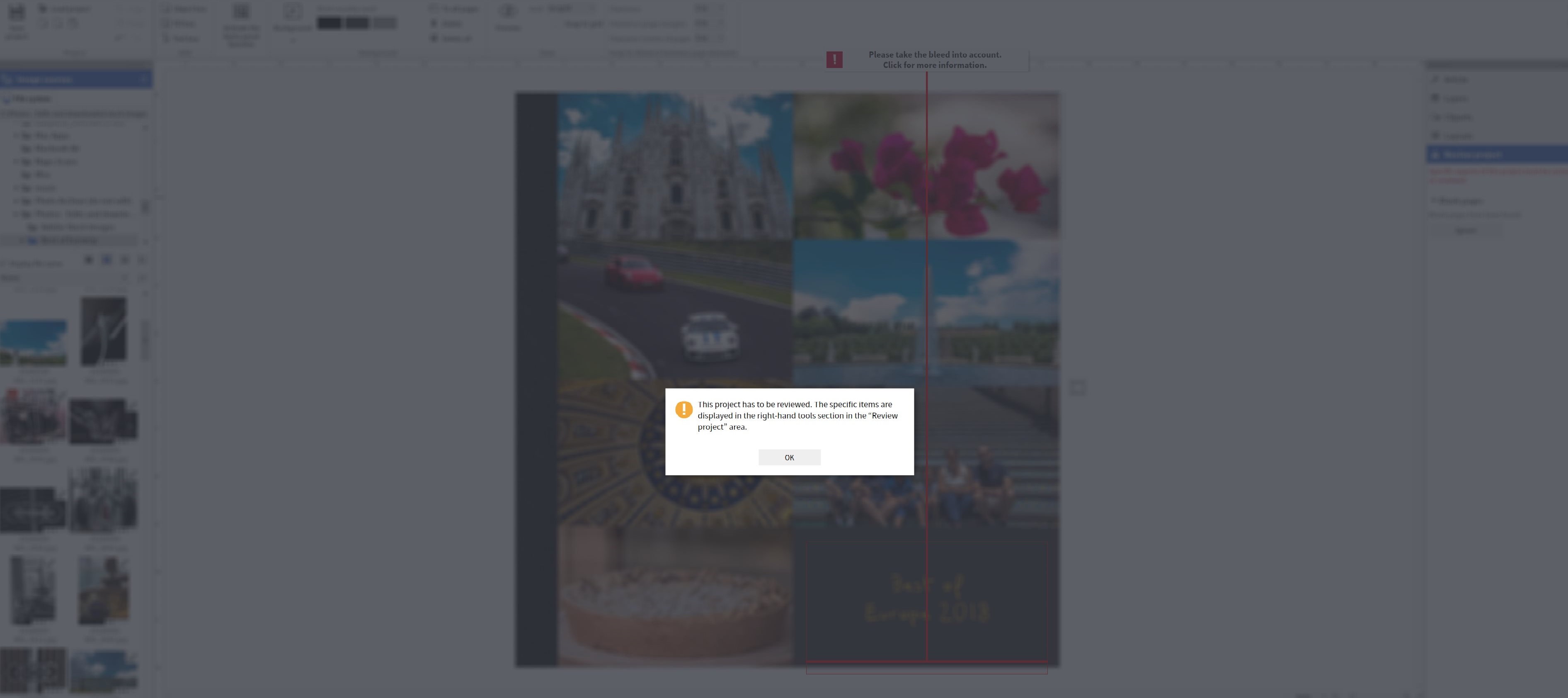
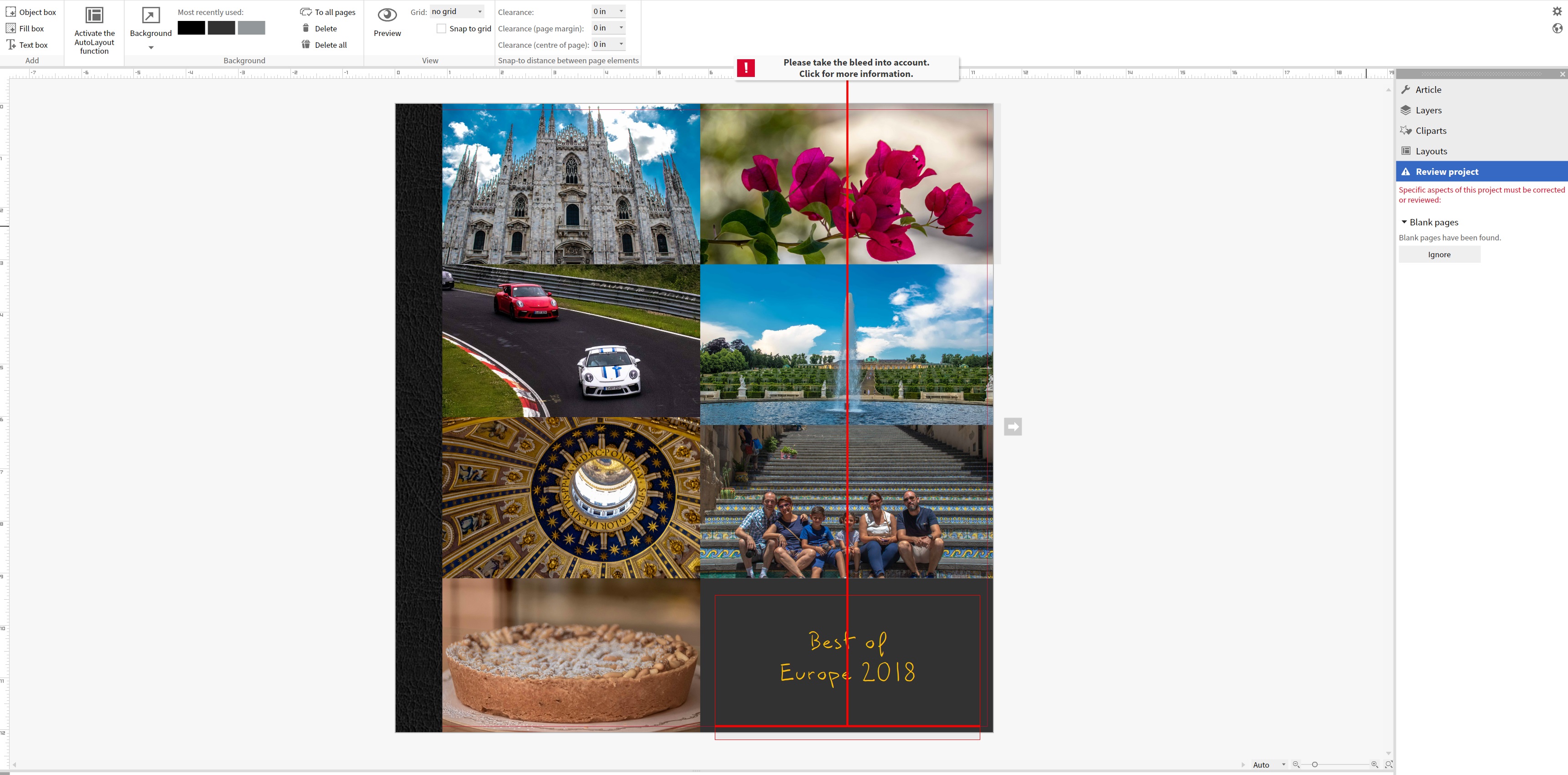
Review process 1

Review process 2

The acrylic cover was impressive – excellent quality, and it took the photobook’s look to a whole new level. After showing the book off to a few people and taking it with me a few places, I am a little worried about the acrylic cover getting scratched, so I am thinking about putting a transparent plastic cover layer over it for protection. For shipping, a plastic protective wrap protected the acrylic cover, but I removed the plastic when unpacking the book. Honestly, we are so impressed with the cover; we want to make sure it is protected long term.

The leather binding was nicely done, and the quality of the leather was exceptional. Since the book was done in the lay-flat format, the book opens nice and full without causing damage to the book’s binding, leather spine, or the pages, plus it makes looking at the pages easy.

The print quality of the pages is excellent. I was worried that a few of the images would not print correctly because they were only of “good” quality and taken with a cell phone, but they printed out nice a clear. In fact, it is hard to tell which images ranked as good quality and which ranked as excellent quality, all came out nice in the printed photobook. 

I was also concerned how the pages would look once printed, given I chose to do a black background. Yet, the pages printed flawlessly, and there was no streaking with color. Each page looked like a professional print.

Overall, I cannot say enough good things about the final product. Selecting the professional line photobook with an acrylic and leather cover is what brought this project to life. It has definitely made this photobook not only a conversation piece, which is now nicely displayed in the living area of our home, but it provided me with a photobook that I want to show off and will treasure forever.

Final Thoughts

I originally envisioned this “best of” photobook, when we were returning from our European adventures in July 2018. I had these images edited and picked out for almost two years now, but I could never find the right photobook option which fit my vision for a photobook until I came across SAAL’s line of photobook options. Designing and laying out the photobook was extremely simple once I got the hang of the SAAL design software (which only took a few minutes). One of the things I enjoyed most about the design and layout process was that I could do it from my desktop and did not have to do so through an Internet interface. The print and binding quality were top-notch as well. Overall, I am incredibly pleased with the final product.

General Overview and Pictures of “The Best of Europe 2018”

— 12 x 12 Professional Line Photobook

— Acrylic and leather cover – the front cover is acrylic, and the spine and back of the book is black leather.

— Glossy photo paper for the page spread

— 52 pages initially (more pages were added throughout the project, for a total of 102 pages)

— Empty Template – No template or auto design/fill used

This slideshow requires JavaScript.

All images featured in this photobook – “Best of Europe 2018” can be found in the following gallery: https://canonscanon.com/portfolio/best-of-europe-2018/


Additional images from our 2018 European Adventure can found on galleries on the home page (www.canonscanon.com). As editing continues, new images are continually added.


This post will also appear on my personal blog (www.findingamy.net)

A dissertation…

I am writing a dissertation…this is a statement I have been saying since September. Those words seem impressive and powerful and may make you sound like you are some type of genius, but, in reality, you are just an ordinary person, working toward a goal. Just saying these words put you in an elite group – one in which you have mastered 6 plus years of college, passed board or qualification exams, and now just have one more task to complete before you are in an even more elite group of people – those with PhDs.

While a lot of my friends and family know what I am doing, I don’t think they fully understand the dissertation process. I often get asked the question – so what is a dissertation? I often find it is hard to explain the dissertation process to non-academic people. Yes, it is a really long paper, but it is unlike any term or research paper you have ever written.  On the other hand, it is not really a book. A dissertation is much deeper than a traditional research paper. While it is mainly in the form of a book, the dissertation engages a set of key research questions, on a given topic. Through research, you form arguments that you support, explain, and defend throughout the work. Since it is an academic work, it engages previous (academic) literature on the topic but also challenges and makes new contributions to that same body of literature. During the dissertation process, as a researcher, you define your methodology or the procedures and methods used to collect and analyze data for the project. A large part of the project is about researching a subject and analyzing the data you find. The key to a good dissertation is the ability to develop your findings into a cohesive and readable narrative, that not only tells a story but also proves your arguments, answers the research questions set forth at the beginning of the research project and makes a contribution to a given field or subject matter.

Successfully writing and defending a dissertation is what turns an individual into a scholar.

The process of “doing” a dissertation is an emotionally draining process. Upon entering the dissertation phase of the Ph.D. process, one of the first things you learn is how to cope with the stressors of a long term project (one that can last several years). Some people resort to regularly crying. So far, I have not done that, although I am sure it is coming!!! I cope by changing to another project or activity that I find relaxing – i.e., gardening, exercise, or something related to photography.

The last few months have reinforced what I thought about the dissertation process long before beginning the dissertation or even entering the Ph.D. program. Mastering a dissertation is like running a marathon. You have to pace yourself and push yourself every day. Given that I have run a few marathons, this is something I often reflect upon.

The same mental training and preparation methods I relied upon when running very much apply to the dissertation process. Two of the most important elements I have found are rest and a clear mind. The brain is one of the largest and most complex organs in the human body. To function fully and best, it needs rest. So when you are tired and cannot push anymore, walking away to get rest is vital. Rest helps to rest your mind. Trying to write or do research when you are exhausted decreases your ability to think, analyze information, and write. Like running, the process of writing a dissertation is very lonely and self-isolating. While no one else is working on quite the same dissertation project as you are, it is still essential to find people to connect with and talk to that are also engaged in the same process. Also, like running, you need a support system to cheer you on. I am lucky to have a supportive husband, mother, some close friends, and peers/friends in the Ph.D. program. Each of them, in their own way, offers the support I need to sustain myself in the process.

Low moments in the dissertation process will occur, but you have to keep pushing. While pushing through the process can be difficult, it can also be rewarding. The research (and the dissertation process in general) helps me to see the world and myself differently. Through research, I am learning so much, and learning is something that drives and excites me. Most of all, I keep pushing because this is something I have always wanted.

While I am researching a focused topic, I am learning about people and places (of the past), and that excites me, but it also helps me understand who I am. It also helps me to keep growing as a person. Some times this growth is in terms of improving my writing or research skills, while other times, it is more analytical or mental.

The dissertation process is transformative. Since beginning the Ph.D. program three years ago, I have seen myself change in many ways. One of the scary yet exciting things about this process is that you do not know how you will be transformed. I often wonder what and who I will be like as Dr. Amy.

Current Happenings, Vol 2020, #2

When I did my last post in late March, I intended to follow up with another post and start regularly blogging again. Well, obviously, that did not happen. So here goes my second attempt.

59 days ago, our area was placed under a stay at home order (quarantine). Thus I have been at home, only venturing out a few times to go to the store.  When quarantining began, I thought I would have much extra time on my hands, but I was wrong. Between continuing to keep up the house, work on a dissertation, and do a few side projects, I have found myself almost busier than before quarantine began.

Over the past 59 plus days, I have cook countless meals and continued to keep the house up.  Each day I have kept up the routine of dissertation research and all of the fun stuff associated with completing a dissertation. Allyn has made the dining room into his office. And I think our cats – Sammy and Sophie – keep wondering when we are going leave so that they can have a quiet day.

Balance has become a key to survival.  Balancing how much time I spend in front of the computer. Balancing home chores with working from home and being at home. Balancing dissertation work and project work. Then learning to balance home space… not just physical space but the noise produced in those spaces from conference calls.

Along with balance has become acceptance. Accepting that even though you are home, you are still going to be exhausted at the end of the day. Accepting that the house is not going to stay totally clean and organized because you are continually moving around it and using it. Accepting that you cannot do everything just because you are home.

While being home is not easy, it has allowed for several things needing attention around our house to get done or get started (and hopefully done one day).  Yard work has been one such thing. To break away from the inside of the house, I have begun working in the yard. Getting outside has allowed me to clean up all of the flower beds, plant flowers, and even clean up the back porch area. The cats have also begun to enjoy the benefits of outdoor time. Yard work will never go away, but for the first time in years, it is now manageable.

Current Happenings, Vol. 2020 #1

Hello, old blog. I think about writing a blog post often but never take the time to sit down, write the post, and post it. I figured there is no time like the present to begin. And, I just thought that I would start with a recap of what has been going on.

  • Beginning in November (of 2019), I made three trips to Texas, and my mom came up to Kentucky twice.
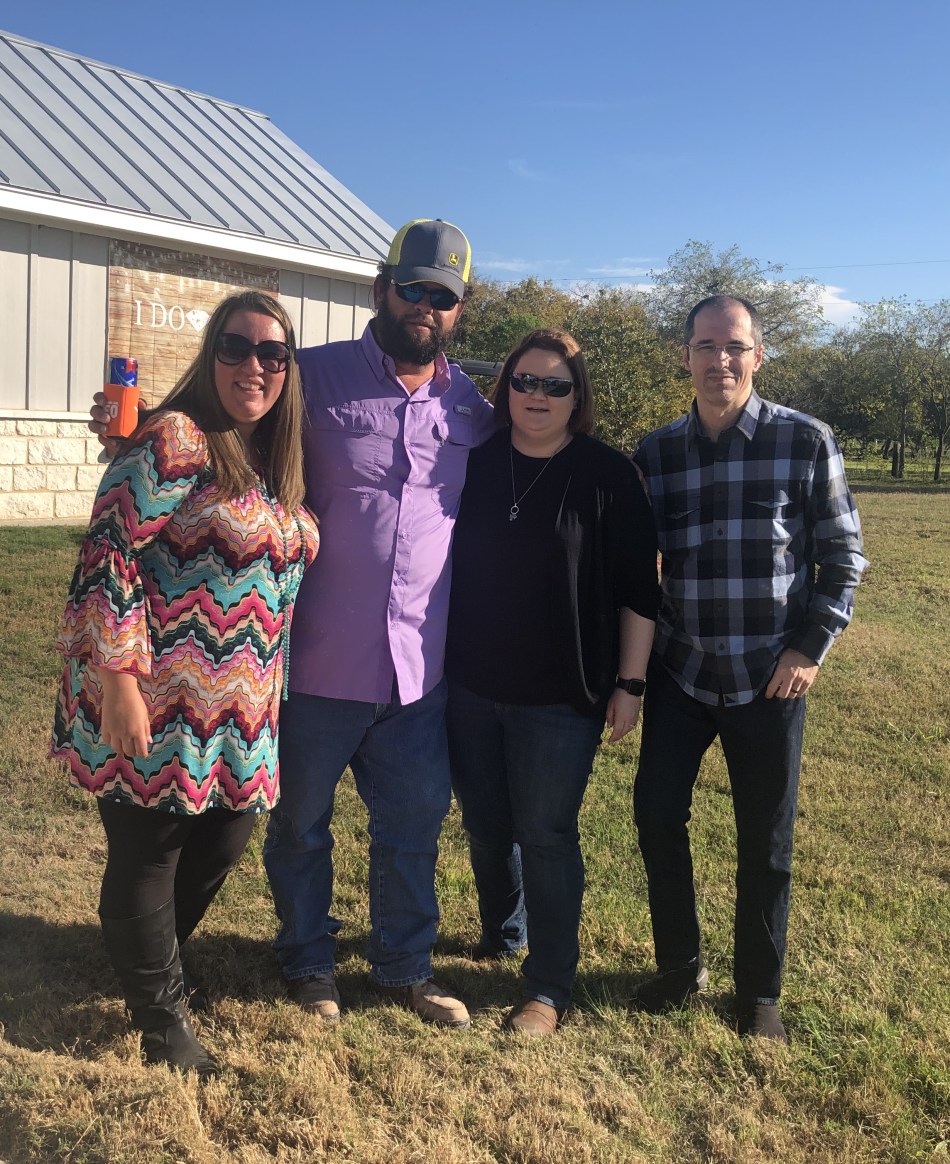
  • My first trip to Texas in the fall of 2019 included attending my cousin’s “I Do BBQ” reception. He got married a few weeks prior in Hawaii, and they had a reception once they got back. I am so excited for him and his new bride – they complement each other nicely.

191123-151242

  • While in San Antonio, I discovered that the Blue Man Group was premiering a new show, and we were able to get tickets. Allyn had seen the Blue Man Group before, but for my mom and me, it was a first.

This slideshow requires JavaScript.

  • My mom came up for Thanksgiving. I cooked Thanksgiving dinner for a good friend of mine and us.

This slideshow requires JavaScript.

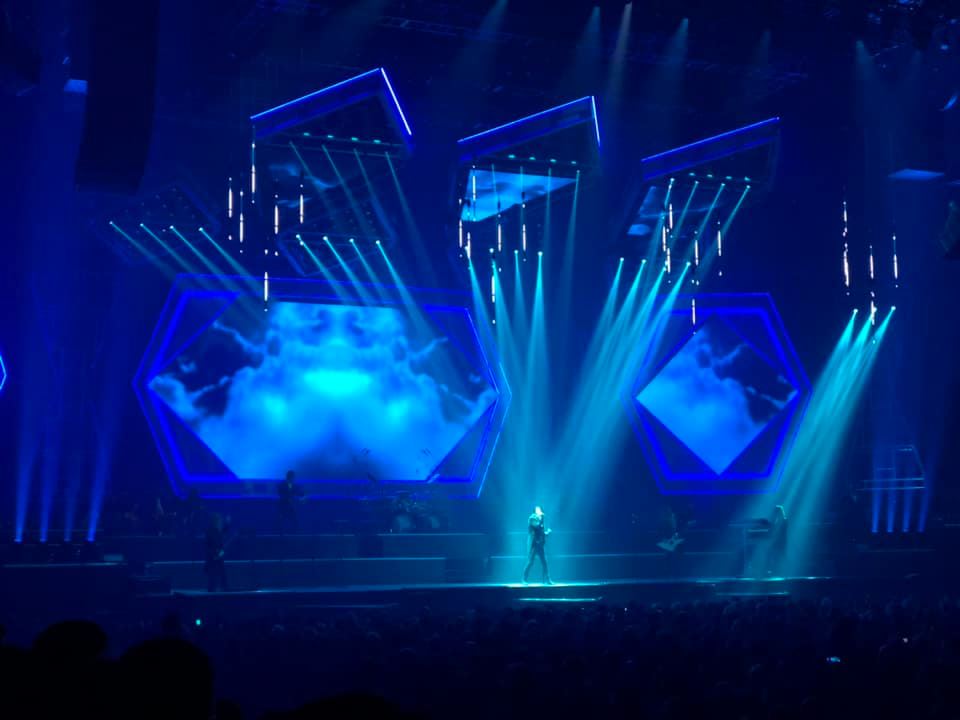
  • The weekend after Thanksgiving, we took my mom to see the Trans-Siberian Orchestra. She had always wanted to go, and since they were in town, we decided this was a good opportunity.

    78809259_10157515594861830_7480370773656338432_n78475022_10157515594306830_4123088125062807552_n

  • In the middle of December, I decided to head down to San Antonio to do some Christmas shopping with my mom, celebrate Christmas with my great-uncle who is in a memory care center, and attended a cousin’s 40th

This slideshow requires JavaScript.

  • My mom came up for Christmas this year. I did a lot of cooking, we went to midnight mass, then watch movies, slept, and ate – all in all it was a good few days of relaxing family time.

This slideshow requires JavaScript.

  • 2020 was rung in with no celebration this year – Allyn and I just spent the night at home. The next day I flew home to Texas to celebrate the holidays with my grandmother’s family. It was a quick trip, but I was glad I went back and got to see everyone.
  • I decided not to “teach” this semester. It was a hard decision in many ways, but also an easy one. Saying yes to teaching meant I was saying yes to a 3-hour drive daily, which was in the opposite direction of the research I needed to do for my dissertation and in the opposite direction of some medical stuff we needed to explore. So, Allyn and I decided that it was best for me to focus on other things and not teach this semester. I am still not sure if I will return in the fall.
  • In January, we attended our IVF education meeting and officially kicked off our IVF journey.
  • In mid-January, we attended a tour if of the Rookwood Pottery Company’s archives. Rookwood Pottery was founded in Cincinnati in 1880 and has been producing art pottery and architectural tile since (over 130 years). In recent years the company has relocated its facility to the heart of downtown Cincinnati in the historic Over-The-Rhine Neighborhood. As a cultural historian who is interested in art, it was fun to walk through the pottery’s archives and see their collection and even some recent work. Many of their pieces are tied to the culture and events in Cincinnati, which to me, is fascinating.

This slideshow requires JavaScript.

  • At the end of January, I finished up my prospectus for my dissertation, sent it to my committee members, and officially started my dissertation research.
  • The beginning of February was kicked off by celebrating our 6th wedding anniversary. We didn’t do anything fancy this year.
  • Also, at the beginning of February (on our anniversary), we attended the Cincinnati Region SCCA (Sports Car Club of America) annual award dinner. For the 2019 season, Allyn won first in his division – driving a Tesla, of course!

This slideshow requires JavaScript.

  • Before it left the Cincinnati Museum Center, we went to see the traveling exhibit “Destination Moon,” which commemorated the Apollo Space Program and the moon landing. We ended up going twice, during our second visit, we got to hear Marion Lee Johnson talk. Johnson was one of the mathematicians responsible for the calculations to simulate vehicle piece impact trajectories during the Apollo missions. It was interesting to hear her speak about her work, but most of all, it was wonderful to see how she encourage the youth.

This slideshow requires JavaScript.

  • In mid-February, we met up with friends from the Scirocco (Cincy) group for Spring-Fling. We did an outing to the Franklin Park Conservatory. The Chihuly exhibit was still up at the conservatory, which was fun and a treat, given I am a big Chihuly fan.

This slideshow requires JavaScript.

  • The end of February brought a lot of frustration and disappointment. To deal with this frustration and disappointment, I started going back to the gym. Going to the gym really helps me to clear my mind and focus better.
  • Shortly after the beginning of March, I headed back to Texas to see my mom and help her celebrate her birthday. While there, we did a lot of things together – cooked, visited family, did yard/ranch work, shopping, bunco night, and took a road trip to Kerrville, Texas, to visit the James Avery Headquarters’ store and museum.

This slideshow requires JavaScript.

  • The concern over the Coronavirus surfaced when I was in Texas. Flying back to Cincinnati was a little eerie – my flights had an average of 20 people on them, and then when we were landing at the CVG airport, you could see almost all of the parking lots were empty. I cannot say I was nervous about flying; it just felt strange.
  • Concerns over the Coronavirus brought the religious education program I teach at our church to an end, which was a real bummer, because I really enjoyed the group of students I had this year. I am also going to miss the other catechists and our fellowship.
  • Since Monday, I have been doing my best to confine myself to the house. I have been working on the dissertation, cleaning, readings, cooking, and watching TV/movies. I don’t mind staying in and doing my part to ward off the virus; I just miss being able to see friends, being able to go to the store regularly, do research in person at archives, my daily trips to the gym and traveling.

Puzzles and Legos

When I was in the hospital a few weeks back, our wing had a common area with tables for games and puzzles. During the day I spent a lot of time around the table working on various puzzles. Over my four day stay, I notice how puzzles were both a conversational piece, a tool for decompressing, and a way to observe differences and characteristics in people.

Working on puzzles became a way for me to not only pass time and relax, but also made for some interesting people-watching time. Throughout the day, people would walk up and quickly find a piece or two before moving on to whatever they were doing next, while others spent hours focusing on how pieces went together.

In general puzzles have a way of bringing people together. Around the puzzle table I met many great people and had many interesting conversations. Above all I made some key observations about different kinds of people – particularly in regards to puzzles. There are the hunters who love to scour, dig and look for the hard-to-find pieces. There are competitors, who always seem to be racing against some imaginary clock to complete the puzzle. Then, there are strategists, who spend much of their time sorting pieces into piles by color. There are also the achievers, who are discontent until every piece has found its rightful spot. And finally there are the leisurely folks, the ones who are just happy to play a part, content to sit and talk for hours while unhurriedly perusing the pieces. Although every person’s process varies, the end goal is the same – to take a bunch of seemingly random pieces and fit them together until the picture of what you’re building comes into focus.

Reflecting on the different ways people approach puzzles helps me to begin to understand the different ways people approach life, especially when we encounter problems or go through difficult times. Additionally, putting puzzles together and watching others do so helps me to think about my path in life. Life is segmented into pieces. On a daily basis we are constantly trying to get our pieces to fit together. Sometimes the pieces fit perfectly into your daily path, while at other times it takes a lot of work to figure out how the different pieces (of life) fit together. At times you have to put a piece aside because it is out of place, or you don’t have time for it, or other pieces become more important. Each of the pieces – our relationships, careers, education, interests/hobbies – fit together to make us who we are. With both puzzles and life, getting those pieces to fit together is an emotional process. Sometimes we feel excited, overwhelmed, happy, hopeful, and confused. As we experience those emotions, we learn about ourselves.

Puzzles have always been part of my life. When I was young, I enjoyed putting all kinds of puzzles together. Then during my teen years, I discovered 3D puzzles. By the time I graduated high school, completed 3D puzzles filled my bedroom, until I moved away from home. My former husband was not impressed by puzzles or by my love of puzzles. Puzzles regardless if they were traditional or 3D or Lego sets, brought me, mom, grandmother, and in more recent years, Allyn, together in the evenings.

After my stay in the hospital, Allyn and I decided to make it a Lego weekend and put together several sets of Legos we had but had not had time to put together. As we were putting the Legos together, I noticed many of the same patterns. I was the leisurely participant while Allyn was the strategist.

The Lego set I put together was the NASA Apollo 11 Lunar Lander. (I have a slight obsession with space exploration and things NASA related). Then Allyn put together the Lego Technic Bugatti Chiron set, which I got him for his past birthday.

70215952_10157287643921830_4414519982721859584_n

While the Lunar Lander set was a typical Lego set, the Bugatti Lego set was a challenge for even Allyn. The Bugatti set consisted of 900 plus steps and is based on a full-scale model of a full functional Bugatti. It has a Lego functional engine, transmission, axles, and wheels.  And of course, it moves.

For me Legos and puzzles represent life… we often take on or are given pieces and we have to figure out how and where they fit into the path we are on. Figuring out how all the pieces fit together can bring out an array of emotions, but it is what makes life exciting.

Fall … Mental Health … Blogging

Now that it is October, it seems that things are finally beginning to change, and the chaos of the summer has finally ended.  The last two months has probably been one of the most stressful times in my life.  In mid-August, I began taking my qualifications exams for my Ph.D. qualification exams in history. The exams include three written exams and then an oral exam. The qualification exams consist of literature from three historical fields – United States history since 1865, environmental history, gender and women’s history and digital history. Studying for these exam was an isolating experience.  No one else has your exact reading list or fieldset. By the time I began the actual exams, I had read over 400 books and articles, and my mind was combination of other people’s voices and ideas and mush. In process of taking each exam, I found it more and more difficult to explain and interpret the information I had read in my voice and thoughts.

I passed. I am officially ABD and in my residency as a candidate for a Ph.D. After that last exam – the oral exam – I broke down mentally and found functioning physically even harder. My mind was in such a bad place; I had to seek professional help, which I fully admitted, too, although it was hard. While I should have spent September celebrating a huge accomplishment, it was instead spent trying to tending to my mind.

Healing ones’ mind is not easy. In the process of becoming better mentally, you come to the realization all the things you need to do to care for yourself.  The most important of these is that you have to take time for yourself.  In the process of studying for quals, I gave up almost everything that gave me joy and helped me to relax, but I did not realize this until I was laying in a hospital bed. From mid-September to mid-August all I did was study and select household responsibilities.  In the process of healing, I have changed that. I am slowly getting back to the things I enjoy.

I started this blog when I losing my first husband. Blogging was a way that I could not only record what was going on in my life, but it became an outlet where I could discuss thoughts and feelings, record the things I was doing and share my journey.  Additionally, I found writing very therapeutic (writing not editing).  I am a strong believer that through writing about you and your thoughts and experiences, you become more mindful of who are as a person.

As I continue the journey of finishing my Ph.D. and writing my dissertation, I think blogging is a going to be part of the process. For through the process of writing my dissertation, I am going to be thinking and discovering who I am not only as professional historian but as person as well.

May …

Now I know I sound like a broken record, but seriously how is it May already? The first four months have completely flown by, and while I am more than ready for summer, I am also not ready for the year to be almost half over. However, I am excited for the month, for summer, and to get back to blogging!

May already has brought the end of the semester, and not just any semester, but possibly my last semester ever as a graduate student. May marked the completion of the course work for my Ph.D. program and the beginning of studying for qualifying exams, which will take place this August. In a few days, I get to go home to the ranch to see my mom, to celebrate Mother’s Day and have some much-needed downtime. Then at the end of the month, we will be getting together with some friends we have not seen in a while. All exciting things!!!

Although I am studying for qualifying exams, I am looking forward to being home more and not having to do the daily hour and half drive to campus. Being home more means that I get to cook more, it means that I might actually be able to go to the gym. It means that I can do things at my own pace. It also means warmer weather and that I get to wear shorts, dresses, sandals and not have to bundle up when going out. It also means that I get to pick up my camera again. Plus it means baseball games and weekend adventures.

So here is to May…